In short
- Do not switch on, browse or 'quickly check' the device: every action changes the evidence.
- A forensic acquisition makes a verified, hashed copy and records the chain of custody.
- The report explains the method and findings so that a solicitor, a tribunal or a court can rely on it.
First steps
- Preserve the device as it is. If it is off, leave it off. If it is on and holds important live data (an open session, a cloud account), ask for advice before switching it off.
- Do not look through it yourself. Opening files, browsing or plugging in a USB stick changes dates and can overwrite deleted data, and it gives the other side grounds to challenge the evidence.
- Note who has had access, when and why. This is the start of the chain of custody.
- Take legal advice early. A solicitor can advise on what you are entitled to examine and how the evidence will be used. The Law Society's Find a Solicitor service lists firms in England and Wales.
- For a crime, report it to the police (or to Report Fraud, formerly Action Fraud, for fraud and cybercrime in England, Wales and Northern Ireland) before any private examination.
The forensic acquisition
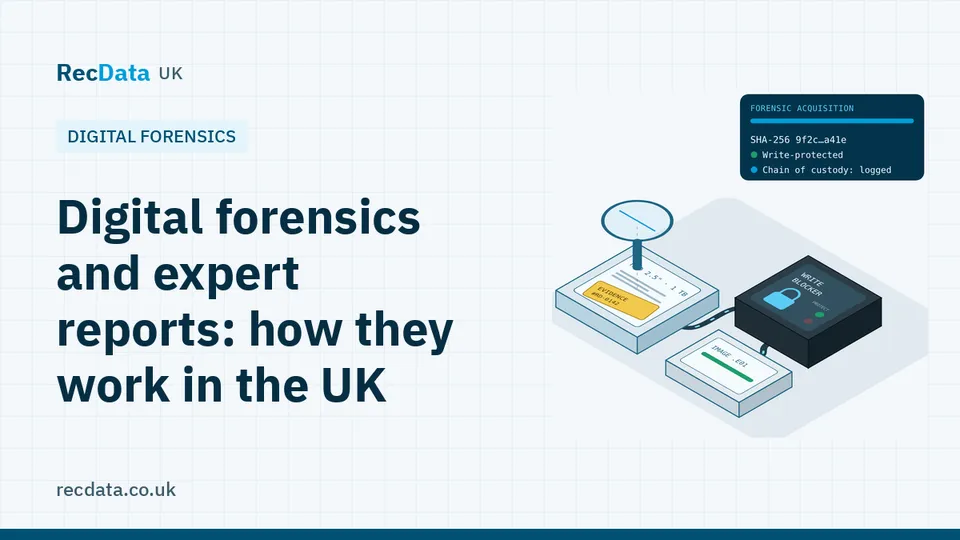
The device is connected through a hardware write blocker, so nothing can be written to it, and a complete image is made. A cryptographic hash (SHA-256) of the original and of the image proves that the copy is identical. Phones are acquired with dedicated tools, and cloud accounts with the owner's consent or a legal basis. The process follows established principles of digital evidence handling, and the UK Forensic Science Regulator publishes the standards expected of forensic work used in the criminal justice system.
What the analysis can show
- Deleted files, emails and messages, and when they were deleted.
- USB devices connected, files copied or uploaded to cloud services.
- Activity timelines: logins, documents opened, websites visited.
- Signs of tampering, wiping software or changes to the system clock.
- The origin and history of a document (metadata, versions, authors).
The report
The report describes the devices received, the acquisition and its hashes, the tools and methods used, the findings and their limits, in language that a non-specialist can follow. For civil proceedings in England and Wales, expert evidence must meet the duties set out in Part 35 of the Civil Procedure Rules, including the expert's overriding duty to the court.
Employers and personal data
Examining an employee's device or account involves their personal data. Organisations should have a clear policy, a lawful basis and a proportionate approach, as explained in the ICO's guidance on monitoring workers.
Our forensic service is described on digital forensics. For incidents involving ransomware, see Ransomware attack: what to do now, who to tell in the UK and how to recover.
Frequently asked questions
Can a company examine an employee's computer?
A company device can usually be examined, but the employee's personal data is still protected. A clear policy, a legitimate reason and a proportionate approach are needed under the UK GDPR, and legal advice is wise before acting.
How long does a forensic acquisition take?
A computer or a phone is usually acquired within a day, longer for large drives or several devices. The analysis and the report then take from a few days to a few weeks, depending on the questions asked.
Official sources and useful links
- Report Fraud (formerly Action Fraud): The UK's national reporting centre for fraud and cybercrime (England, Wales and Northern Ireland).
- The Law Society: Find a Solicitor: To find a solicitor in England and Wales for a dispute or a complaint.
- Information Commissioner's Office (ICO): The UK data protection regulator: personal data breach reporting and UK GDPR guidance.
Is your data important?
Do not try anything that could make the fault worse. The diagnosis is free and you get a fixed quote before any work starts.