In short
- Deleting, emptying the bin and quick formatting leave the data recoverable.
- One full overwrite is enough for a hard drive; SSDs and phones need encryption and a factory reset or the drive's own sanitise command.
- Businesses must be able to show that personal data was destroyed, under the UK GDPR.
What does not erase data
- Deleting files and emptying the Recycle Bin or the Bin.
- A quick format, or reinstalling the operating system.
- Removing the partition in Disk Management.
- On an SSD, overwriting files with "shredder" programs: wear levelling writes the new data elsewhere and the old blocks can survive.
Hard drives
A single full overwrite of every sector makes the data unrecoverable on modern hard drives. Use a tool that writes the whole drive, not just the free space, and verify it finished without errors. Drives that no longer work cannot be overwritten: they must be physically destroyed (shredded or degaussed and destroyed). The NCSC's guidance on secure sanitisation of storage media sets out the options for each type of media.
SSDs, USB sticks and memory cards
- On an SSD, use the drive's built-in Secure Erase or Sanitize command through the manufacturer's tool, or the encryption method below.
- Encrypt, then reset: turn on BitLocker on Windows or FileVault on a Mac before disposal, then erase the drive. Destroying the encryption key makes the remaining data unreadable.
- USB sticks and memory cards do not have reliable erase commands. If they held sensitive data, physical destruction is the safe option.
Phones and tablets
Modern iPhones and Android phones are encrypted by default. A factory reset destroys the encryption key, which makes the data unreadable. Before resetting:
- remove the phone from your Apple Account (Find My) or Google account, so it is not locked to you;
- back up what you need;
- remove the SIM and any memory card, which is not covered by the reset.
For businesses: the UK GDPR
Under the UK GDPR, organisations must protect personal data until it is destroyed and be able to demonstrate how it was done. The ICO's guidance on security applies to disposal as much as to day-to-day use. In practice:
- keep an inventory of devices and their serial numbers;
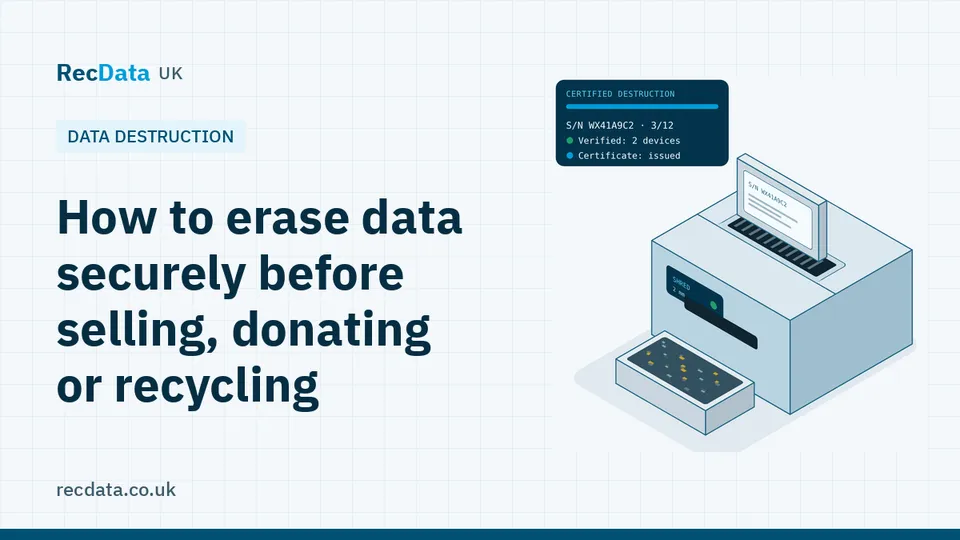
- use a disposal company that issues a certificate of destruction per device;
- recycle the hardware through an authorised route under the WEEE regulations; households can find a local point through Recycle Your Electricals.
Our certified destruction service, with a certificate for each device, is described on secure data destruction. If you erased something by mistake, read Formatted the wrong drive by mistake: how to recover the files.
Frequently asked questions
Is a factory reset enough before selling a phone?
On a modern iPhone or Android phone with encryption turned on (the default for several years), yes, provided you first sign out of your Apple or Google account and remove any memory card.
How many overwrite passes does a hard drive need?
One full pass is enough on modern hard drives. Multiple passes date from much older drive technology. What matters is that every sector is overwritten and that the process is verified.
Official sources and useful links
- Information Commissioner's Office (ICO): The UK data protection regulator: personal data breach reporting and UK GDPR guidance.
- UK GDPR (legislation.gov.uk): Official text of the UK General Data Protection Regulation.
- Recycle Your Electricals: Where to recycle electrical and electronic devices near you.
- WEEE regulations (GOV.UK): The rules on waste electrical and electronic equipment in the UK.
Is your data important?
Do not try anything that could make the fault worse. The diagnosis is free and you get a fixed quote before any work starts.
Request a free diagnosis Secure data destruction data recovery